Kutch, an exceptional land of great antiquity, is filled with an overwhelming profusion of artistic expressions, developed over thousands of years of habitation and amalgamation. This enormous, tortoise-shaped, salt-flecked semi-desert seems to stretch into timelessness with its intriguing and awe-inspiring splendour. The crescent-shaped region, forms a part of northwest Gujarat. Kutch is almost an island - surrounded by the Arabian Sea on the west and by enormous saltwater marshes, the Great Rann and Little Rann of Kutch on the north and east. These dangerous marshes are formed by sea inundating low-lying land.
Kutch derives its name from the terms Kachua or Kachbo, indicating the resemblance of its shape to that of a tortoise. The unique location of Kutch as a gateway into ancient affluent India, had turned the region into an ideal steppingstone for various plundering invaders with a lusting eye on the stupendous wealth of India, to time and again, attack the subcontinent from the north and northeast. Kutch has, therefore, a lively and colourful past, with different foreign invaders leaving their own indelible stamp on the culture and lifestyle of the local people. The remarkable fusion of distant cultures with vibrant indigenous styles has moulded Kutch into an artistic paradise.
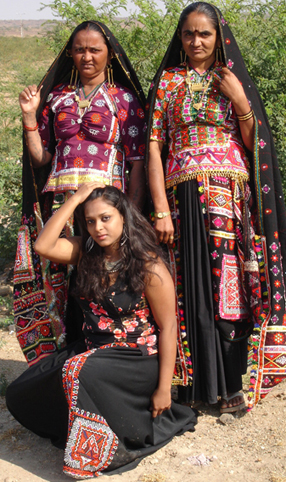
Kutch is a repository of age-old artistic traditions. Exquisite embroideries, patchwork, leather craft, textile printing, tie and dye, Mashru weaving, wood carving, lacquer work, silver inlay, bead work, jewellery making, terracotta ware, and mud relief wall-decoration are famous crafts produced by skilful Kutchi artisans. The intricate Bandhani work of Bhuj is in great demand all over the world even today. Special cloth printing processes that are unique to this area, like Batik, Ajrakh, and Rogan, have made a name for themselves, both in and outside India. Kutch is famous for Kamangiri art or Mural painting.
View More


