



Bhavadia Embroidery
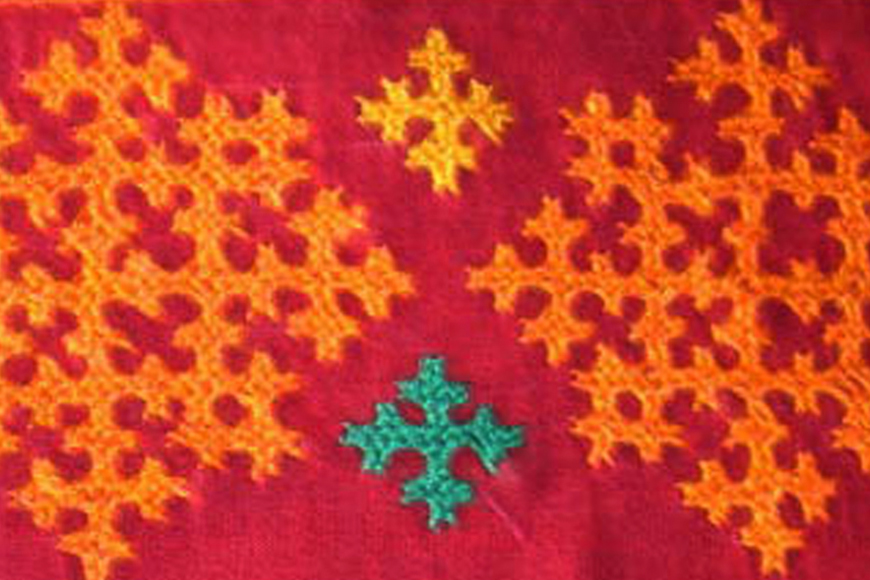
Bhavadia interlacing embroidery stands out as an excellent example of the sheer dynamism and diversity of workmanship displayed by the professional needle workers of Kutch. The artistry enclosed within this field of embroidery is extensive, owing to the regional adaptation of the basic interlacing design. Although Bhavadia or Kutchi Interlacing Stitch is practised in Saurashtra and other parts of Gujarat, it is considered the cohesive element that binds together all Kutchi embroideries and is believed to embody the very essence of Kutch.
This embroidery is used to create a magical world of colour on a myriad of modern articles, ranging from tiny baby frocks to large bedspreads. The inspiration for the colour scheme is drawn from the palette of the immense wilderness that surrounds them. Variants of this embroidery range from the minute Ghuton stitches of the Mutvas to the extra large version used by the Jadejas of Lilpar. Lilpar is the only place in Kutch where Bhavadia stitches are exclusively used. All other rural embroideries use Bhavadia Interlacing Stitch in limited quantities to infuse the essence of Kutch into their traditional embroideries.
There is a saying among the Kutchis that it was the tangled thorny branches of the lowly Bhavadia bush (Acacia arabica) dotting the countryside of Kutch, which inspired their ancestors to create this dramatically different type of embroidery. By a strange coincidence, this embroidery bears a striking similarity to a complicated variety of surface Interlacing Stitch practiced in Armenia, a republic nestled against the Caucasian mountains. It is also seen in the White Work embroideries of ancient Germany.
The basic principles of Bhavadia Embroidery could probably have its roots in far-off lands and may have found its way into Turkey along with the roots of madder, which was being traded there. It is not beyond the realms of possibility that these techniques may have been imbibed by Kutchi merchants who had established themselves in unshakeable positions of overseas trade in various places along the Silk Route. Nomadic pastorals travelling up and down the Central Asian-Western India route could have brought the basic methodology into Kutch.
Buy Now