


Mochi Embroidery
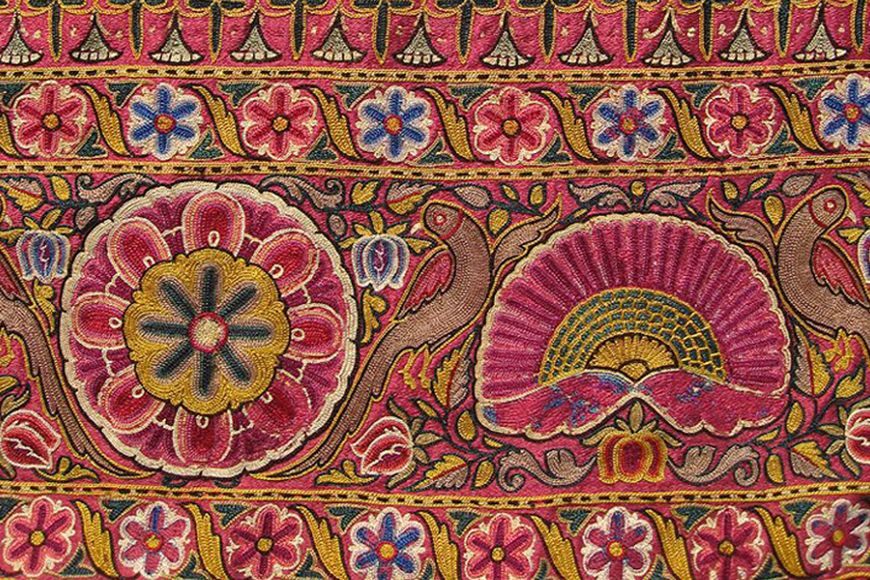
Mochi embroidery is without doubt the most exquisite of all Kutchi embroideries and requires not only talent but also creative virtuosity and an eye for detail. The perfect intermingling of subtle hues creates such an accurate feel of light and shade, that one often mistakes the embroidery for a master piece in oil, painted by the delicate brush strokes of a genius. The naturalistic picture par excellence thus created captured not only the royal patronage in India but also took over the Western textile market from the 16th to the 19th centuries. Mochi Bharat was very much a vital part of the trade textiles of India, throughout the British rule.
Mochi embroidery, or Mochi Bharat, is a fine chain-stitch embroidery traditionally created by professional male embroiderers of the Mochi (cobbler) community in Gujarat, India. The craft involved using a fine hooked needle called an aar (or ari) to produce very minute and uniform chain stitches, a technique originally developed for working on leather before being adapted for cloth.
The East India Company primarily exported these textiles from the port of Cambay (modern Khambat) in Gujarat, leading to them often being known in Europe as "Cambay embroideries". This style of embroidery gained significant popularity in Europe, with demand so high at times that similar-looking textiles made with different, less time-consuming techniques were also produced. The items featured in the Company's London auction sales from as early as 1614. During the British Raj, the European elite continued to patronize aari work, just as the Mughal emperors had done previously.
Skill and talent are the hallmarks of this embroidery. Persian and Mughal influence are clearly visible in the schematised figures of bulbuls, parakeets, peacocks, elephants, horses and damsels (Putlis). Repeating floral buttis, Karamphul, alternating with a skilful arrangement of birds and animals are sought-after themes. Fearsome lions, tigers, and jaguars have been captured in majestic stances on silken fabrics, by skilled artisans.
Western devices overlapped the predominantly Indian designs, in the form of bouquets and baskets of spring blossoms. Careful shading imparted naturalism to many motifs created for the European market.
Buy Now