


Mutva Embroidery
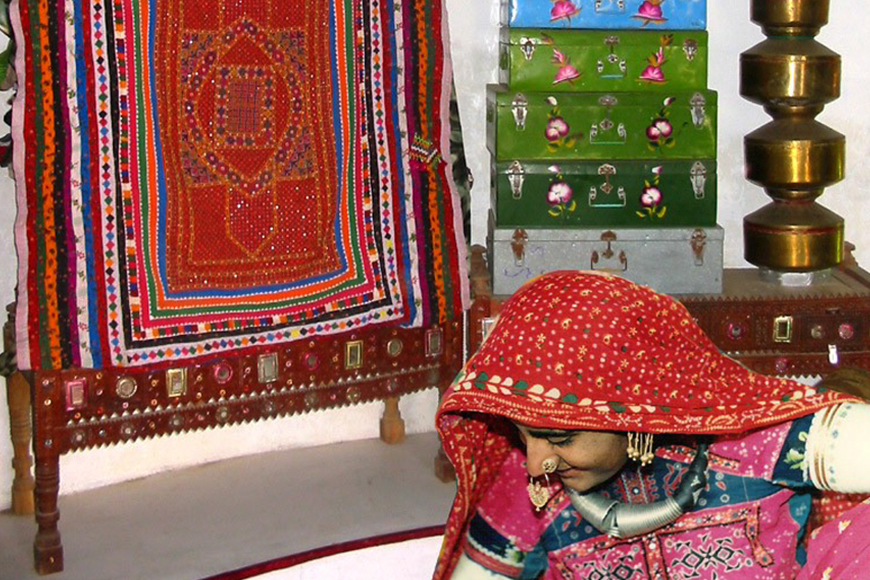
The Mutva community is concentrated in Dhordo village in Banni. Rough sandy tracks lead to this remote yet serene hamlet. Solitary houses emerge intermittently from within drifting layers of hot sand that settle quickly on every available surface. The village has 30 to 35 circular Bhungas made using time-honoured techniques. The recent attempt at modernisation involves the use of cement and tiles for construction. The brightly painted interiors of houses indicate their love for eye-catching colours. Dhordo village is a popular centre for tourism.
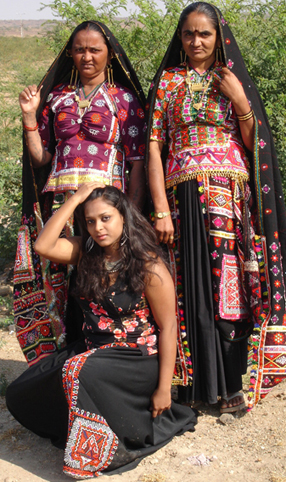
The lifestyle of the Mutvas is similar to that of other Muslim communities living in Banni, and they follow a pastoral occupation. The people of this clan wear costumes unique to their caste, as is the custom with most Kutchi communities. Mutva women wear long cotton or Mushru blouses Kanjiri, in colours of personal preference. Other Kutchi castes tend to strictly conform to traditional requirements. Only married women are allowed to embroider their Kanjiris with needlework representative of their community.
The dainty rendition and exquisite composition of Mutva needlework makes it one of the most commercially sought-after embroideries. Many communities try to emulate Mutva embroidery, sometimes at the expense of their own embroidery styles, due to the commercial popularity of this unique needlework.
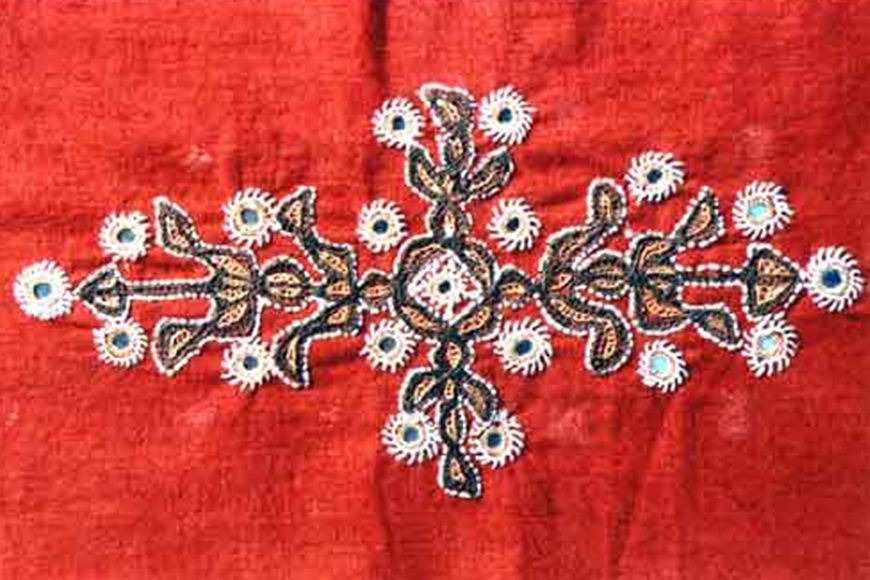
Mutva embroidery is distinguished by its delicate appeal created by tiny stitches rendered in a brilliant spectrum of colours. The stitches, studded with tiny shimmering mirrors, seem to metamorphose into smouldering rubies, mellow pearls, incandescent crystals, and glowing emeralds and sapphires. Their embroidered costumes look like the fabled jewel-encrusted attire of a bygone era.
The avoidance of human representation in Islamic art led to the artistic evolution of purely geometric designs arranged in visually appealing formats. Mutva stitches are so small that the use of a very fine needle known as Holo is required. This stitch can only be rendered after some practice due to its minute size.
Buy Now